

赖纳·赫德里希:深圳有潜力成为现代都市农业和生态创新之地 | 窗口周刊

亚太经合组织第三十三次领导人非正式会议即将在深圳举行。本届会议聚焦“开放、创新、合作”三大优先领域,粮食安全、绿色发展等议题备受关注。在一位德国科学家眼中,深圳正是这场绿色变革的潜在主场——他正试图为植物“发送”摩斯电码,让作物在干旱、盐碱到来之前就做好准备。近日,这位德国科学院院士、植物电生理学奠基人、深圳理工大学讲席教授赖纳·赫德里希,讲述了“读懂植物”与“书写植物”的故事,以及他与深圳的双向奔赴。
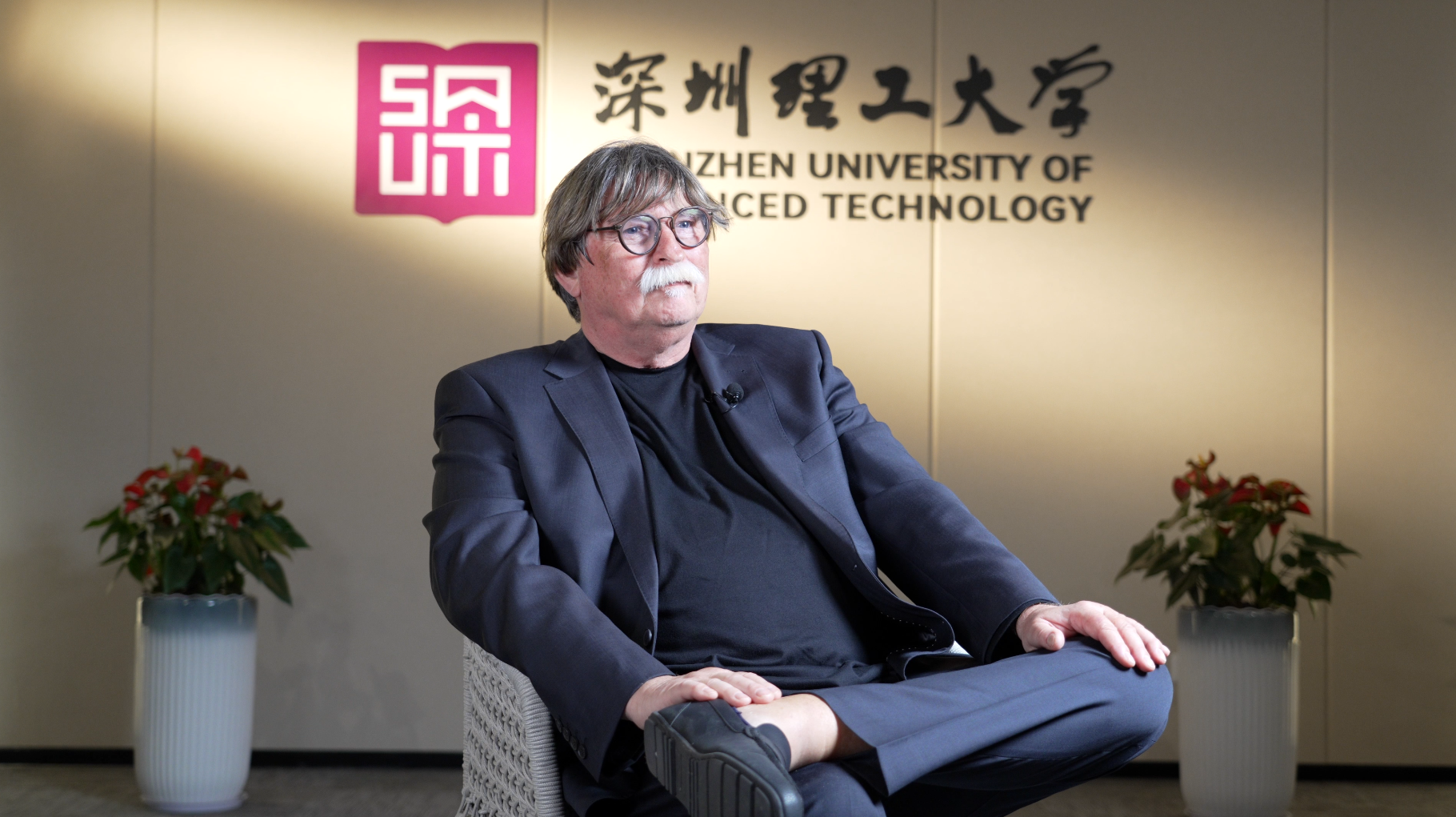
深圳理工大学讲席教授赖纳·赫德里希
一“钳”打开植物电信号的世界
“科学是我生活的中心——清晨醒来,脑子里想的都是实验,这已成了生命的一部分。”1985年,赫德里希在德国哥廷根大学获得博士学位。彼时,膜片钳技术已在动物神经科学中广泛应用,转折发生在他把去除了细胞壁的气孔保卫细胞“原生质体”放上膜片钳微电极的那一刻。“从第一次实验起,我们就监测到钾离子通道。”那一刻,现代植物电生理学由此发端。
哥廷根正是膜片钳技术的发源地。赫德里希的博士后导师厄温·内尔与伯特·萨克曼,因发明该技术摘得1991年诺贝尔生理学或医学奖;同年,赫德里希出任汉诺威大学教授。导师那句“永远不要把固有模式视为理所当然”,他记了一辈子。今年诺贝尔生理学或医学奖揭晓,他2004年招至维尔茨堡大学的同事格奥尔格·内格尔,与卡尔·戴塞罗思、彼得·黑格曼共同获奖,成果正是基于光门控离子通道的光遗传学。
40余年前,赫德里希首次将膜片钳技术引入植物研究,证明了植物离子通道的存在,成果被写入教科书;他在气孔运动调控机制、植物离子通道的发现与功能解析等领域作出开创性贡献,还首次证明捕蝇草能够对电信号“计数”并据此作出决策。1996年至2024年,他在维尔茨堡大学尤利乌斯·冯·萨克斯生物科学研究所担任分子植物生理学与生物物理讲席教授,培养了近百名青年科研人员。
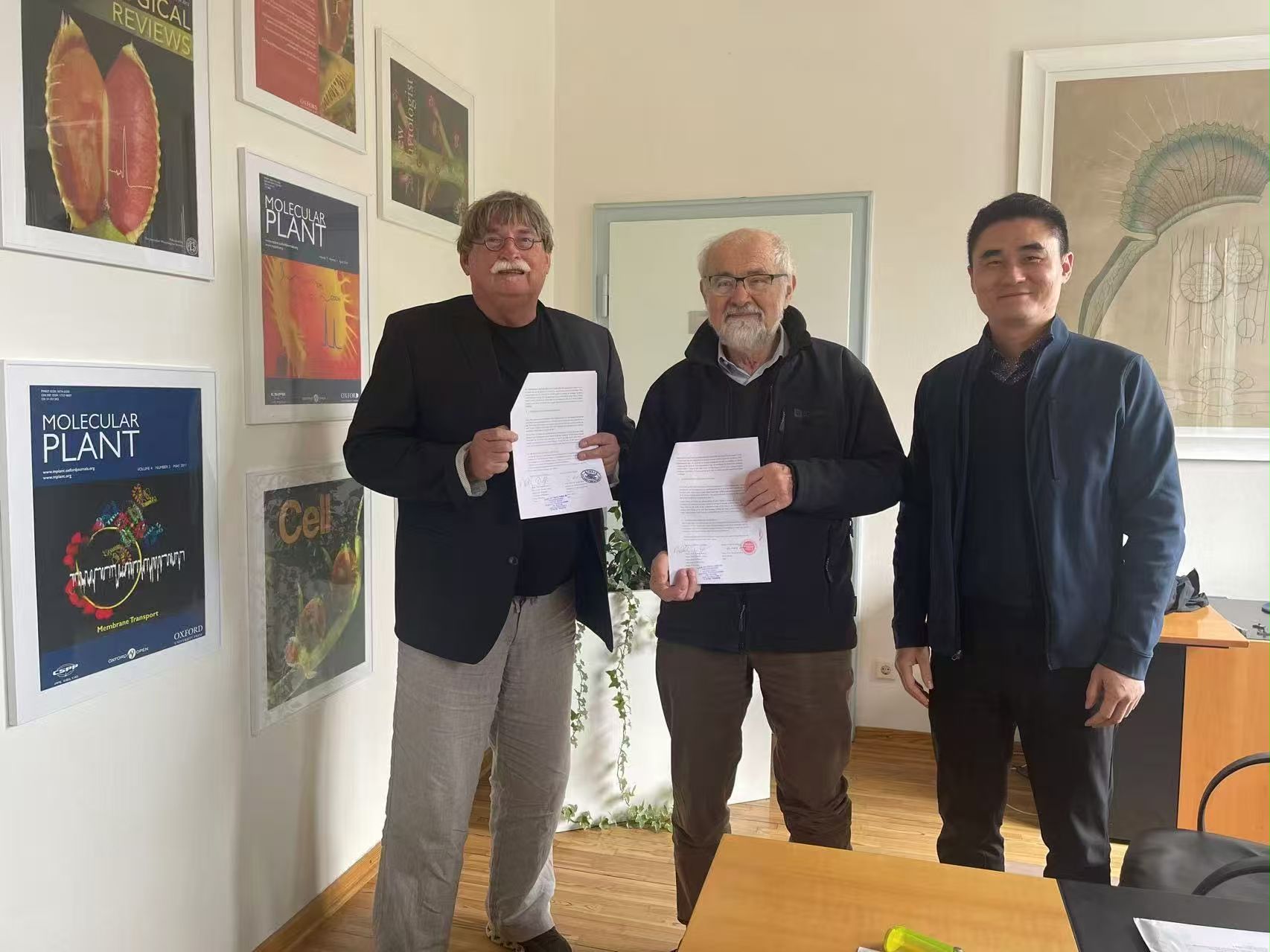
赫德里希与自己的博士后导师、诺奖得主厄温·内尔(中)
在合成生物学院开启“深圳新篇”
赫德里希第一次听说深圳理工大学,是从导师内尔那里。退休前,他接到世界各地的邀请,其中一份就来自深圳。2025年1月,他全职出任深圳理工大学合成生物学院讲席教授,随他一同来深的,还有他最出色的中国学生之一黄寿光。他说,“在深圳我翻开了新篇章,你不能只为过去感到自豪,而应该构建你的未来。”
“我在这里找到了归属感——深圳理工大学有合成生物学院,也有未来农业研究院,这样的体系布局,在德国等欧洲多数国家都没有。”在深圳,他看到了一种独特的共生:“合成生物学的土壤和比亚迪这样的企业是一起长出来的——都是在梦想之上筑梦想。”他还看到了中国科学院深圳先进技术研究院、深圳理工大学、深圳湾实验室在脑科学领域的强劲实力,并在此遇到了马克斯·普朗克研究所时期的老朋友。
建平台、购设备,如今赫德里希的研究中心已全面运转。“接下来三年,我会全速推进。”谈及深圳效率,他感触尤深,一切从头开始,深圳市与深圳理工为团队提供了科研启动经费和一流实验条件,学校隔壁就是“脑解析与脑模拟重大科技基础设施”。赫德里希表示,“定了就干,这就是‘深圳速度’——我毫不怀疑,这里很快会有更聪明的AI芯片。”顿了顿,他又补充道:“瞄准精准农业、智慧农业,我定了一份时间表——而深圳,就是能让我按时实现它的城市。”
从“读懂”到“书写”,让整个深圳变成花园
“过去,我努力‘读懂’植物;如今,借助光遗传学可以‘书写’并远程调控它们。”赫德里希这样概括深圳新篇。他要带领团队用量身定制的光脉冲向植物“发送”摩斯电码,通过电信号及相伴的离子波,让植物在干旱、盐碱等逆境来临之前就做好准备——他把这称为“抗逆锻炼”。
“但前提是,要弄清植物如何运作——这是基础研究、根本性研究。”赫德里希介绍,团队既建有试验农田,也搭建了室内农业平台。关于这套“植物语言”何时能走出实验室,他给出答案:室内农业先行——以垂直农业发展基于光遗传学的理念,远程调控植物生长、发育与生产;大田应用则需耐心,乐观估计也许十年之内。他更畅想:“整个深圳都可以变成花园。”届时,高楼之间、阳光之下,都长出粮食与绿意。
赫德里希与中国的缘分始于2008年——这里的长城、兵马俑、大雁塔、雪山与牦牛都令他震撼。“中国这么大,文化、气候如此多样,有极端温度、极端海拔、极端盐碱地区——农业就是要让植物适应不同的区域。”来深以后,“万物终年生长”“盛夏热得出不了门”也都被他笑着归入研究视野。如今,深圳已经成了他的第二故乡。
赫德里希认为:“深圳有潜力成为现代都市农业和生态创新之地。”这句话,恰为APEC会议粮食安全、绿色发展等热点议题写下生动注脚。从哥廷根到维尔茨堡,再到深圳光明科学城,一位科学家的“下一站”与一座城市的“未来时”在此交汇。11月,当世界的目光聚向深圳,植物体内那些微弱的电流,或将与这场盛会同频共振——向着亚太共同繁荣的绿色未来,生长出更多可能。
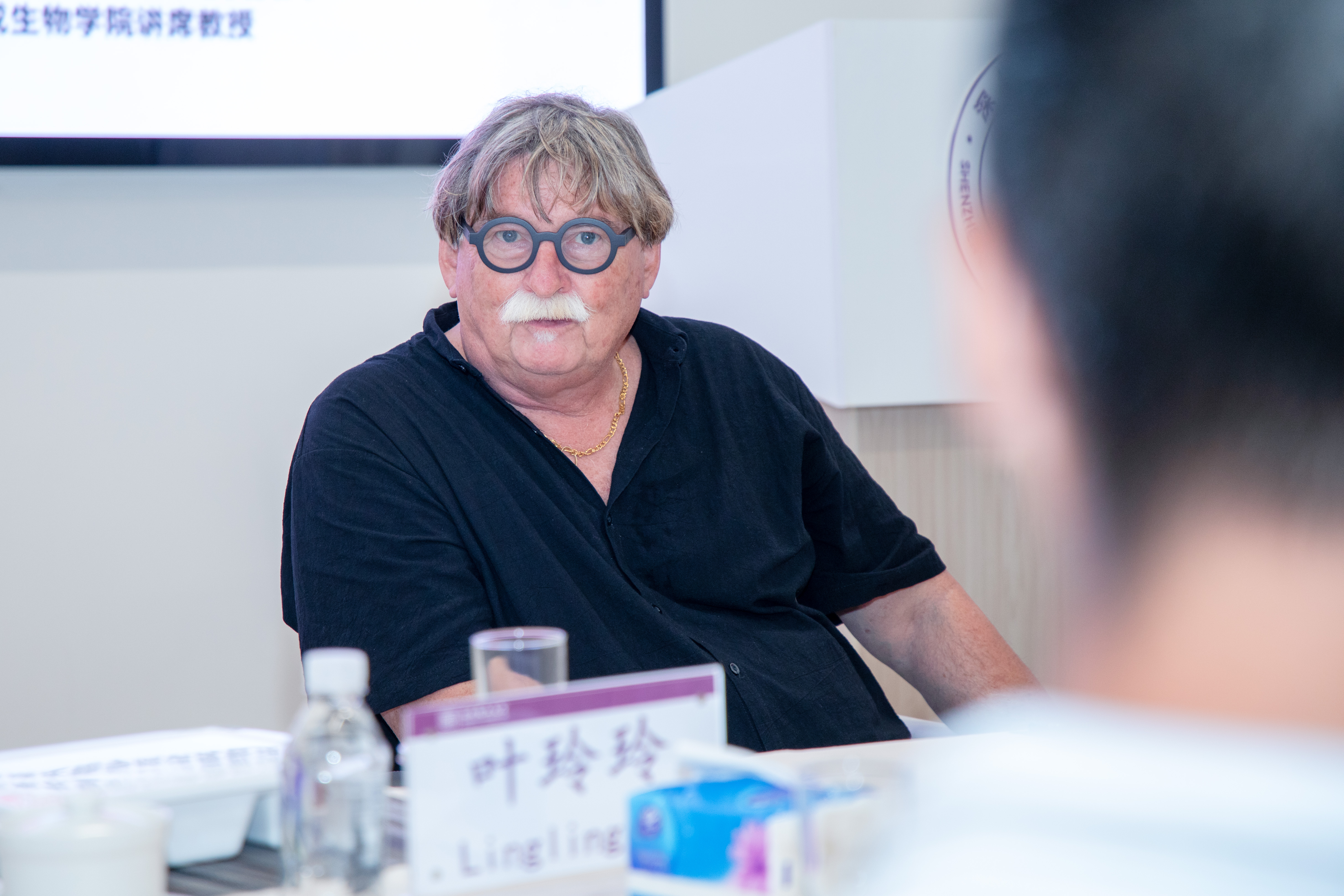
与学生座谈
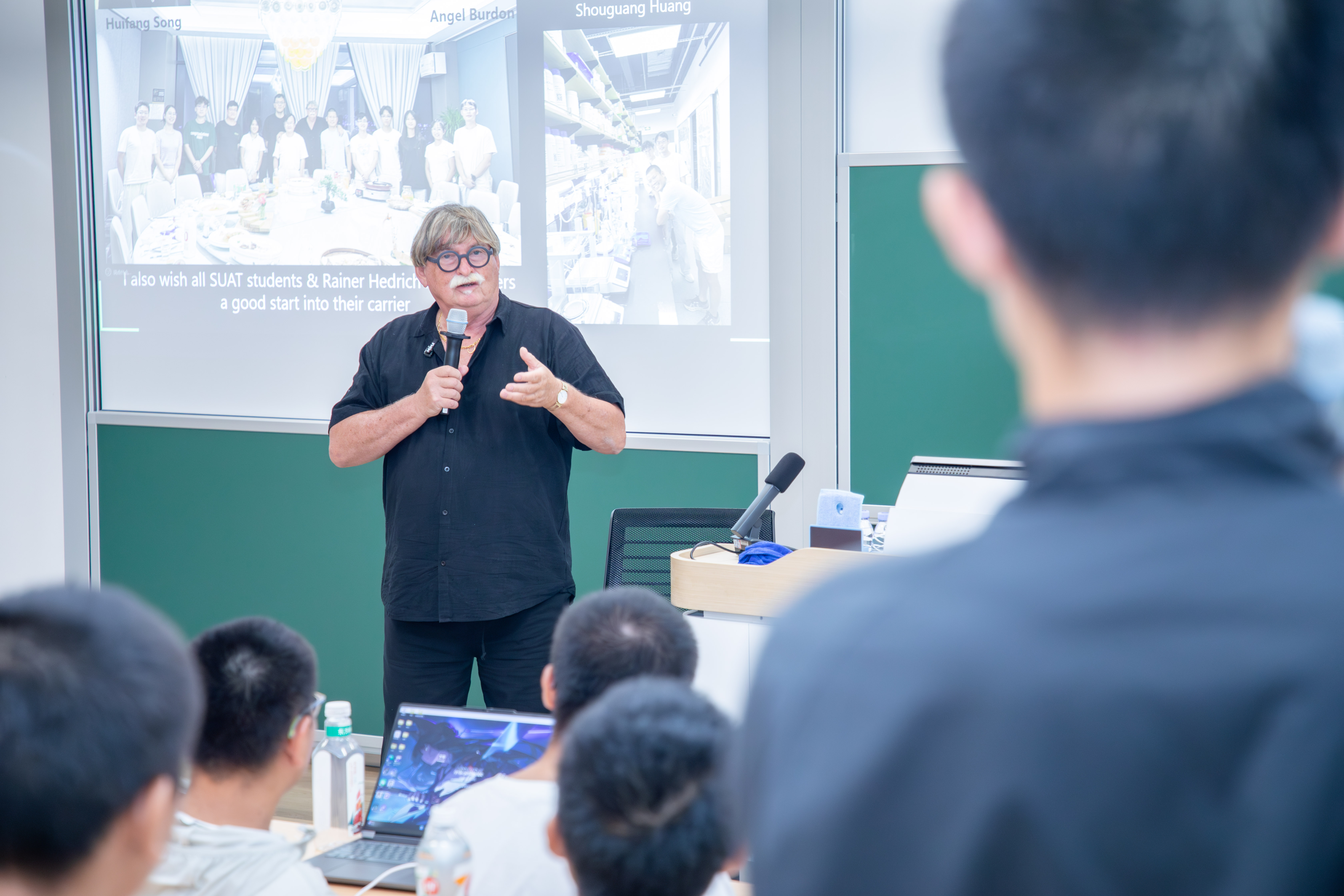
为学生讲座
Rainer Hedrich, member of the German National Academy of Sciences Leopoldina, pioneer of plant electrophysiology and chair professor at Shenzhen University of Advanced Technology (SUAT)
Shenzhen poised to become a hub for modern urban agriculture, ecological innovation
This year’s APEC summit prioritizes openness, innovation and cooperation, with food security and green development high on the agenda. German scientist Rainer Hedrich sees scope for Shenzhen to help advance that green transition. His team is working to send light signals — akin to Morse code — to prime plants for drought, saline soil and other environmental stressors.
Hedrich, a member of the German National Academy of Sciences Leopoldina and chair professor at Shenzhen University of Advanced Technology (SUAT), studies how to read and control electrical signals in plants. He is widely regarded as a pioneer of plant electrophysiology.
“Science sits at the center of my life. I wake up thinking about experiments,” Hedrich said.
He earned his doctorate at the University of Göttingen in 1985. Scientists there used the patch-clamp technique on animal cells. Hedrich adapted it to protoplasts — wall-free plant cells — and detected potassium channels on his very first recording. The finding laid the foundation for modern plant electrophysiology.
His postdoctoral advisers Erwin Neher and Bert Sakmann invented the patch-clamp method and shared the 1991 Nobel Prize in Physiology or Medicine. Hedrich took a professorship at the University of Hannover the same year, carrying their lesson: never take established ideas for granted.
Georg Nagel, recruited by Hedrich to the University of Würzburg in 2004, was a co-recipient of this year’s Nobel Prize in Physiology or Medicine for optogenetics research on light-gated ion channels, alongside Karl Deisseroth and Peter Hegemann.
For more than four decades, Hedrich has examined how ion channels govern plant functions, including stomatal opening and closing. These pores let plants exchange gases and conserve water. He also demonstrated that Venus flytraps count electrical signals before closing.
From 1996 to 2024, he held the chair in molecular plant physiology and biophysics at the University of Würzburg, where he mentored nearly 100 researchers. He learned about SUAT through Neher and joined the university full time in January 2025. He brought with him Huang Shouguang, one of his former Chinese students.
“I turned a new page here in Shenzhen,” he said. “You should not only be proud of your past; you have to build your future.”
Hedrich is drawn to Shenzhen because SUAT’s School of Synthetic Biology and Institute for Future Agriculture bring these complementary disciplines under one roof. He also notes strong brain-science teams at SUAT, the Shenzhen Institutes of Advanced Technology of Chinese Academy of Sciences, and Shenzhen Bay Laboratory, plus old Max Planck Institute colleagues.
His research center is fully operational, with labs and equipment installed. SUAT supplied startup funding and facilities, and a major brain-analysis and simulation facility stands next to campus. “Once a decision is made, work begins — that is the ‘Shenzhen Speed,’” he said.
His team is exploring how optogenetics — using light to control cells — can deliver commands to plants. Tailored light pulses trigger electrical and ion waves, conditioning plants to tolerate drought, high salinity and other threats. Hedrich terms this “stress hardening.”
He stresses this remains fundamental research: scientists must first unpack how plants work. His team runs trials on test plots and indoor growing platforms. He expects indoor agriculture, including vertical farms, to adopt the technology first to steer plant growth. Broad field deployment will take longer, though it could arrive within a decade.
Hedrich envisions a Shenzhen where high-rises stand alongside places to grow food and greenery. “The whole of Shenzhen could become a garden,” he said.
His ties to China stretch back to 2008. He remembers being struck by the Great Wall, the Terracotta Army, and the
snow-capped peaks and yaks. China’s
wide-ranging climates and terrain create ideal natural laboratories to study crop adaptation. In Shenzhen, its year-round growing season and sweltering summer heat have fed his research.
“Shenzhen has the potential to become a hub for modern urban agriculture and ecological innovation,” he said. His research bridges plant biology and the global quest to secure food supplies amid a changing climate, mirroring the green aspirations of this APEC gathering.
(Translated by Li Jing)
编辑 白珊珊 审核 杨战 滕琪 任琦